Illustrator Advanced The amazing Adobe Illustrator puts any conceivable vector art project within easy reach. Yet, most digital designers only scratch the surface of everything Illustrator has to offer.
In the intensive 6-lesson class, you'll work with noted industry professional Michael Hamm, who will guide you through projects you never dreamed of doing. You'll move beyond the Pen tool and explore gradient meshes, symbols, actions, and filters. You'll create photo-realistic illustrations, complex patterns, and rich designs, accelerating your efforts using helpful workflow features. You'll build on your existing Illustrator abilities and take your skill set to the next level. Bring on those Illustrator projects!
On this page: enrollment details | instructor | class projects and objectives | prerequisites
Class Title: |
Illustrator Advanced |
|
Start Date: |
Classes start daily.
Enroll today and gain immediate access. |
|
Class Length: |
Three months of access to class materials and instructor feedback. |
|
|
Other details: |
Self-paced, online, 24 access to online learning environment |
|
|
| |
Tuition:
$829
|
 |
 |
|
 |
Class Instructor Bio:
Michael Hamm is a freelance designer and Web developer with more than 8 years of experience in the field of interactive design. Based in Washington State, Michael previously worked for JPMorgan Chase as an interactive designer. Michael's work has been published in various Web design books and magazines. In addition, he has served as technical editor on several design books published by Friends of Ed. Michael is an Adobe Certified Expert (ACE) in Adobe Illustrator and he is the founder, designer, programmer, and writer of Ergodraw.com, a Web site that grew from his passion for the illustration software and all things vector.
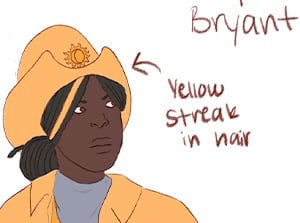
LEFT: Image from Advanced Illustrator with Michael Hamm.
One of many projects -- design a flag using several advanced techniques. |
Class Projects and Objectives:
This online class is packed with projects and tips. Students can expect to:
- Create a better color workflow using swatch libraries.
- Discover advanced color sampling techniques for vector and raster art.
- Explore various methods for creating complex gradients.
- Use the Color Blends and Meshes Tools to create realistic color transitions.
- Learn several filters that handle color modes, blends, and other effects.
- Create three to five water droplets on a tile background.
- Learn how create reflections of light on a background tile color to create color transitioning.
- Create droplet shapes using modified or distorted circles.
- Use gradients, blends, and the mesh tool to create realistic color blends.
- Learn how and when to use transparent objects.
- Learn about each of the 16 blending modes.
- Explore opacity masks and their ability to add dimension to artwork.
- Learn how knockout groups and isolated blending refine works with transparency.
- Learn how flattening works to retain transparent areas for printing.
- Design an MP3 player device and interface.
- Consider the dimension and lighting angles required to produce realistic features.
- Use advanced color features for color transitions.
- Use blending modes and opacity masks to provide proper lighting.
- Learn to create three-dimensional effects and stylized scribbles.
- Learn how autotracing works and when it is (and isn't) useful.
- Explore shape blending options for interesting shape effects.
- Learn to distort shapes with warp effects and envelopes.
- Explore each of the filters and effects available in Illustrator.
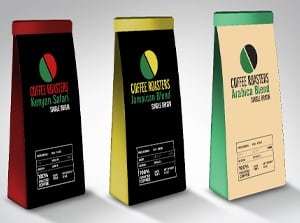
- Design a label and 3D can mock-up for a fictional client.
- Use filter, effect, and/or distortion methods to design the product label.
- Apply the label design to a can template using envelope distortion.
- Learn how to create custom brushes of many different types.
- Learn to design brushes that create complex patterns on paths.
- Explore the use and creation of simple and complex patterns.
- Learn how symbols are used and their purpose in a document.
- Learn to use Illustrator's graphing features.
- Create a flat custom flag design.
- Design patterns on the flag so they are seamless, considering how each side will line up when tiled.
- Apply the flag to the fabric template using an envelope distortion.
- Apply a blending mode to the shading layer of the template.
- Learn how clipping masks are created to shield areas of artwork.
- Learn to use the Appearance and Styles palettes to manage and apply artwork attributes.
- Learn how compound paths and fill rules work.
- Learn to record frequently used sets of commands as one-click Actions.
- Use a rough sketch as a guide to create a transit map.
- Use appearance features such as multi-stroking to create roads and railways.
- Use additional tools and features (pattern brushes and so on) to create a professional map design.
- Learn how to save files for use in Photoshop, Flash, Word, and PDF documents.
- Learn to create Scalable Vector Graphics for the Web.
- Explore methods for Web image optimization and HTML output.
- Learn how dynamic documents speed tedious Illustrator tasks.
- Create a symbol and instances to design a school of fish.
- Break the link of an instance to create a different fish based on an original design.
- Use Symbolism tools and layer duplication to create at least 12 frames of an animation.
- Export the layers to SWF frames, creating a SWF animation file.
| Prerequisites: |
- Own and have basic experience with Adobe Illustrator 10, CS, or CS 2.
|
|